Trail Mountain Bike Tires in the USA — Top 5 Options for 2025 (Expert Guide): Find the Right Balance of Grip, Durability and Rolling Efficiency for Your Trails
Published on Monday, August 25, 2025
Versatile trail mountain bike tires are optimized to deliver a balanced mix of grip, traction, and rolling efficiency across varied trail conditions. For 2025 American riders, the ideal trail tire combines a mid-width tread profile with a durable casing and tubeless-ready construction to handle wet roots, loose shale, hardpack, and technical rock gardens found from the Coast Range to the Rockies and the mixed trails of Southern Ontario and Quebec. Consumers in the USA increasingly prioritize puncture resistance, predictable sidewall support for cornering, compound performance in cool and wet weather, and the ability to run lower pressures safely for better traction. These preferences make mid-width options with reinforced casings and modern tread designs particularly appealing for all-mountain rides and modern trail bikes.
Top Picks Summary
Maxxis Minion DHR II 29x2.4 WT
The Maxxis Minion DHR II earns its market-leader spot for exceptional braking traction and predictable cornering thanks to its aggressive tread and Wide Trail (WT) casing optimized for modern rims. Technically it outperforms many rivals on steep, technical trails where controlled deceleration matters, and although it sits at a premium price point, its durability and proven race pedigree deliver long-term value versus lighter, less robust options. Compared with the others on this list it prioritizes stopping power and resilience over absolute low rolling resistance or maximum volumetric flotation.

Schwalbe Hans Dampf 29x2.35 Super Trail
The Schwalbe Hans Dampf is a versatile Super Trail tire known for a balanced blend of grip, rolling efficiency, and predictable cornering, making it a go-to for riders seeking one tire that does many jobs well. Technically its intermediate knob profile and compound deliver faster rolling than more aggressive treads like the Minion DHR II while still offering confident bite, and its price positions it as a premium all-rounder compared with value-oriented Protection-cased tires. Against wider-volume contenders on this list it sacrifices a bit of flotation for crisper handling and lower rotational weight.

Continental Trail King 29x2.4 Protection
The Continental Trail King stands out for its Protection casing that emphasizes puncture resistance and sidewall durability, making it a cost-effective choice for riders who prioritize longevity and low maintenance. Financially it represents strong value—often cheaper than top-shelf race-focused tires—while technically offering stable tread performance on mixed terrain, though it trades some outright grip and braking bite compared with the Minion DHR II and Hans Dampf. For bikepackers and aggressive trail riders who want fewer flats without constantly replacing tires, it is a practical alternative to lighter, softer-compound models.

WTB Vigilante 29x2.5 TCS Light
The WTB Vigilante in 2.5 width with TCS Light construction delivers big-volume confidence and excellent traction in loose or rooty conditions, with tubeless-ready light casing that keeps rotational weight reasonable. Technically it offers superior flotation and a more aggressive footprint than the narrower entries here, making it the preferred choice for riders seeking extra grip and stability, though its softer, chunkier knobs may wear faster than the Protection-cased Continental. It also represents a competitive value for riders wanting high-volume performance without stepping up to heavy, reinforced casings.

Specialized Butcher Grid Trail 29x2.3
The Specialized Butcher with Grid Trail casing pairs proven, fast-rolling center knobs with supportive side knobs and reinforced sidewalls, delivering a balanced trail tire that excels in high-speed cornering and aggressive riding. Its Grid casing offers superior sidewall protection and consistent feel under load compared with lighter casings like the WTB TCS Light, while Specialized's distribution often places it in a competitive price band for riders seeking OEM-level quality without paying top-tier specialty premiums. Compared to the Maxxis and Schwalbe, the Butcher aims to blend predictable on-trail performance with durability tailored to aggressive daily use.
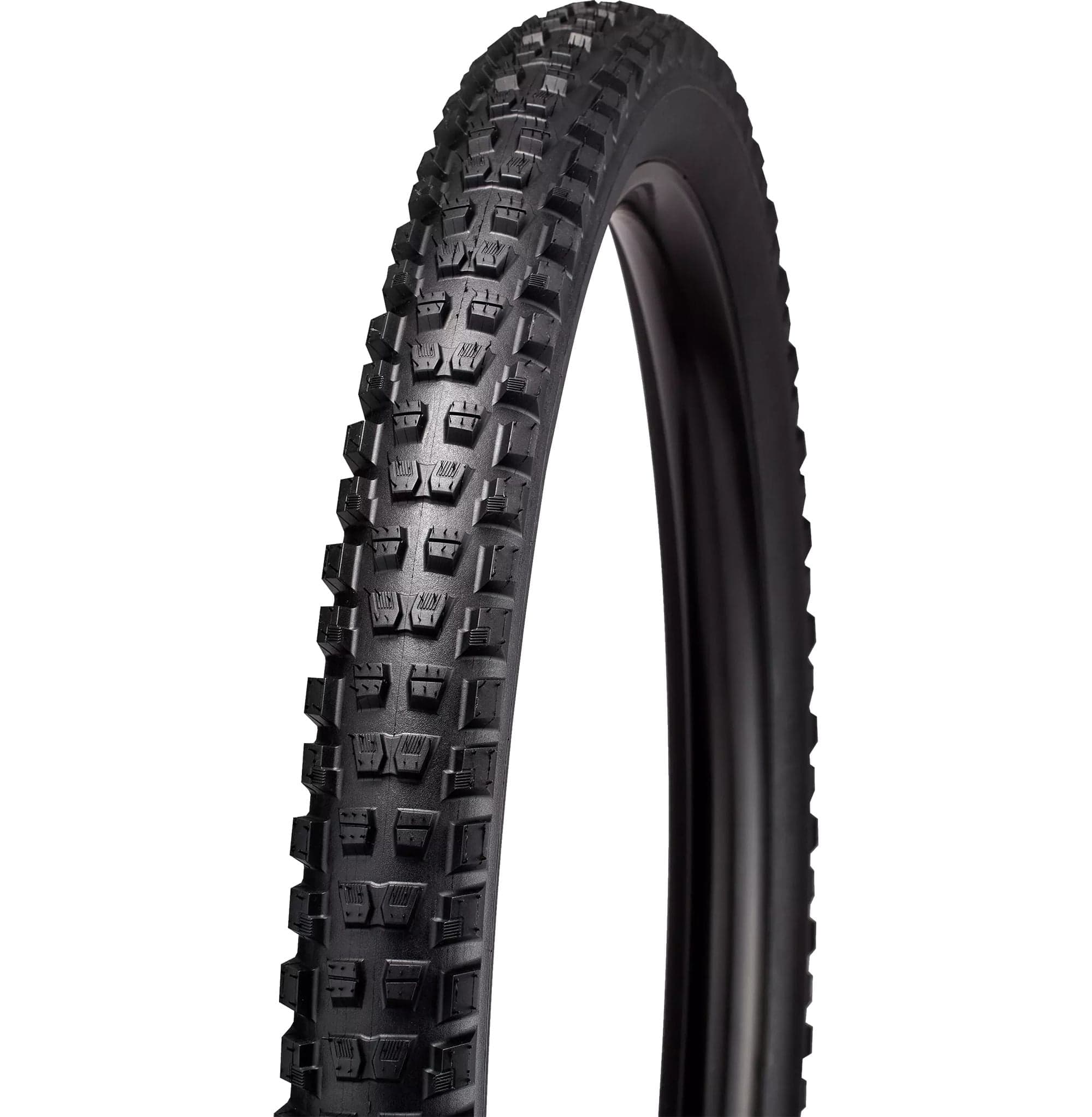
What Research and Tests Tell Us About Trail Tire Performance
Lab tests and field evaluations consistently highlight the tradeoffs between grip, rolling resistance, and durability. Understanding the underlying principles helps riders choose tires that match their local terrain and riding style. Key findings from independent rolling resistance tests, materials research, and field studies show why casing construction, tire width, tread pattern, compound, and tubeless setups matter for real-world trail performance.
Contact patch and pressure: Wider tires and lower pressures increase contact patch and improve traction on loose or wet surfaces, but there is a point where excessive width or too low a pressure increases rolling resistance and risk of rim damage.
Casing and sidewall support: Stiffer casings offer better cornering support and puncture protection at the cost of added weight; modern trail casings aim to balance suppleness with protection for mixed-terrain riding.
Rubber compound and temperature: Softer compounds improve grip, especially in cool or damp conditions common in many American regions, while harder compounds extend tread life on abrasive rock and hardpack.
Tubeless benefits: Tubeless setups reduce pinch flats, allow lower pressures for traction, and, when used with sealant, often self-seal small punctures — backed by numerous field test reports.
Tread design and self-cleaning: Aggressive, widely spaced knobs shed mud better, while tighter, center-oriented designs lower rolling resistance on hardpack; choose tread based on the dominant local trail surface.
Controlled tradeoffs: No single tire wins every category; independent lab measurements and rider-focused tests demonstrate that selecting the right tire is about matching design tradeoffs to your trail priorities.
Frequently Asked Questions
Which tire should I choose for steep technical braking?
Maxxis Minion DHR II 29x2.4 WT (rated 4.6) is a rear-oriented DHR II tread built for powerful braking traction and predictable cornering on steep, technical trails, using its Wide Trail (WT) casing optimized for modern rims.
What specific feature helps the Schwalbe Hans Dampf roll faster?
Schwalbe Hans Dampf 29x2.35 Super Trail has open, closely spaced center blocks that roll efficiently, plus shoulder ramps that bite in corners; it uses a Super Trail casing with reinforced sidewalls for durability.
Is Continental Trail King 29x2.4 Protection good value for puncture resistance?
Continental Trail King 29x2.4 Protection is rated 4.5 and focuses on puncture resistance via its Protection casing with a sturdy breaker under the tread, aiming for longevity and low maintenance, while being described as cost-effective—often cheaper than top.
Will Maxxis Minion DHR II 29x2.4 WT fit my modern rim?
Maxxis Minion DHR II 29x2.4 WT is built with a Wide Trail (WT) casing optimized for modern rims, and it’s designed as a rear tire with aggressive braking-oriented tread.
Conclusion
In USA’s varied trail environments, these five tires are strong options for 2025: Maxxis Minion DHR II 29x2.4 WT, Schwalbe Hans Dampf 29x2.35 Super Trail, Continental Trail King 29x2.4 Protection, WTB Vigilante 29x2.5 TCS Light, and Specialized Butcher Grid Trail 29x2.3. Each delivers a different balance of grip, rolling efficiency, and casing protection for specific trail types — from loose, technical singletrack to fast, hardpack descents. For most American all-mountain riders seeking a reliable, go-anywhere balance, the Maxxis Minion DHR II 29x2.4 WT is the best overall choice on this list due to its predictable braking traction and robust casing. I hope you found what you were looking for — you can refine or expand your search using the site search to match tire width, casing, or trail condition preferences.