Top 5 UVB Replacement Tubes & Bulbs for Reptiles and Amphibians in the USA — 2026 Expert-Reviewed Guide to Find the Right UVB Match
Published on Monday, February 2, 2026
Replacement tubes and bulbs include OEM and third-party options matched by spectrum and intensity to maintain effective UVB systems. Keeping proper replacements on hand ensures consistent UVB delivery and timely swaps to retain efficacy. This category covers T5 and T8 linear tubes, compact fluorescent bulbs, and mercury vapor options tailored for reptiles and amphibians. American buyers prioritize reliable spectrum, measured UVB output, replacement intervals, energy efficiency, and availability from local retailers or fast-shipping national distributors. Species-specific needs — from desert-dwelling bearded dragons that require strong basking UVB to rainforest frogs that need lower, filtered UVB — drive purchase decisions. In 2026 the market in the USA continues to favor proven lamp technologies with clearer labeling, third-party replacements that match OEM spectra, and an increased focus on long-life, energy-efficient options that simplify maintenance for hobbyists and professional keepers alike.
Top Picks Summary
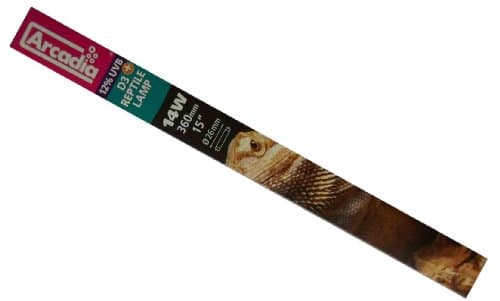
Arcadia D3+ T8 12% UVB Tube
Arcadia D3+ T8 12% UVB Tube is positioned as a best-in-class high-output T8 tube delivering a broad-spectrum UVB profile tailored for diurnal reptiles and amphibians; it balances strong UVB output with a stable spectral curve and typically longer lamp life than compact alternatives. Compared with the T5 and mercury-vapor options in this list it offers a cost-effective middle ground—higher consistent UVB than many basic tubes while running cooler and cheaper than mercury vapor floods for similarly exposed animals.
Why UVB Matters: The Science Behind Replacement Bulbs
UVB radiation triggers vitamin D3 synthesis in reptiles and amphibians, which in turn enables proper calcium absorption and bone metabolism. Veterinary and herpetological research consistently links appropriate UVB exposure to reduced metabolic bone disease and better overall growth and activity in captive animals. The scientific essentials are straightforward and practical: specific UVB wavelengths and sufficient intensity are required, UVB output declines over time even if visible light remains, and enclosure geometry and distance to the animal determine effective dose. Understanding these points helps keepers choose the right replacement tube or bulb and replace it at appropriate intervals.
Effective UVB range: Research and veterinary guidance show the biologically relevant UVB for vitamin D3 synthesis is concentrated between roughly 290 and 320 nanometers; product choices aim to deliver usable flux in this band.
Intensity and distance matter: UVB decreases rapidly with distance and with barriers such as glass or screen mesh. Manufacturer percent ratings (for example, 6% or 12%) and lamp type (T5 HO vs T8 vs compact vs mercury vapor) help match intensity to species needs.
Bulb aging and replacement: Studies and manufacturer tests demonstrate that UVB output can fall significantly long before a bulb’s visible light dims. Most linear T5/T8 and compact UVB bulbs are recommended for replacement on a 6 to 12 month schedule depending on type, while some high-output products may maintain usable UVB longer — always follow manufacturer guidance and check with a UVB meter when possible.
UVB + heat options: Mercury vapor bulbs provide both UVA/UVB and high heat for basking zones, but produce greater ambient temperatures and require careful fixture and wattage selection for safety.
Species variation: Desert, crepuscular, and forest species require different UVB intensities and photoperiods; matching bulb spectrum and placement to the species is key to good husbandry.
Practical testing: UVB meters and consultation with reptile vets or experienced keepers are recommended to verify that lamp choice and placement deliver the intended UVB dose in a specific enclosure setup.
Frequently Asked Questions
Which UVB tube should I buy for beardies and diurnal reptiles?
Arcadia D3+ T8 12% UVB Tube ($19.54) has a 4.7 rating and a 12% UVB output designed for a wide range of diurnal reptiles, balancing strong UVB output with a stable spectral curve for consistent vitamin D3 support.
Does the Zoo Med ReptiSun 10.0 T5 HO tube deliver 10% UVB?
Yes—Zoo Med ReptiSun 10.0 T5 HO UVB ($76.99) is a high-output T5 HO design delivering strong, focused 10.0 UVB for desert species, with a 4.5 average rating and a stable spectrum.
Is Arcadia D3+ T8 12% UVB tube cheaper than Exo Terra UVB 150?
Arcadia D3+ T8 12% UVB Tube costs $19.54, while Exo Terra Reptile UVB 150 Compact Bulb costs $48.89; the cheaper Arcadia option targets broad diurnal use with 12% UVB, and Exo Terra is a compact bulb for tight enclosures.
Which is better for small enclosures, Exo Terra UVB 150 or tubes?
Exo Terra Reptile UVB 150 Compact Bulb ($48.89) is intended for compact bulb use in small enclosures and dome fixtures, with a 3.8 rating and elevated UVB for medium-range exposure; the listings provided don’t state a warranty duration.
Conclusion
In USA, a reliable supply of matched replacement tubes and bulbs keeps captive reptiles and amphibians healthy through seasonal changes and routine maintenance. The five options highlighted here — Arcadia D3+ T8 12% UVB Tube, Zoo Med ReptiSun 10.0 T5 HO UVB, Exo Terra Reptile UVB 150 Compact Bulb, Zoo Med PowerSun UV Mercury Vapor Bulb, and Arcadia D3 Forest 6% UVB T5 — cover a broad set of species needs: from strong basking UVB to lower-forest outputs and combined heat + UVB solutions. For most generalist keepers seeking accurate spectrum, consistent output, and wide availability in the USA, the Arcadia D3+ T8 12% UVB Tube is the best overall choice on this list, while the Zoo Med PowerSun is the right pick when integrated heat and UV are required and the Arcadia D3 Forest is preferable for lower-intensity forest setups. I hope you found what you were looking for; if not, refine or expand your search using the store search to compare wavelength specs, output curves, and replacement intervals for each product.