High Output UVB Fluorescent Tubes for Reptiles and Amphibians: Top 5 Options in the USA (2025) — Lab-Informed, Keeper-Trusted Guide
Published on Monday, February 2, 2026
High output UVB fluorescent tubes deliver stronger, more stable ultraviolet-B radiation suited to desert and high-basking reptiles and amphibians. These T5 HO and spot-style options support vitamin D3 synthesis at greater basking heights and are commonly used with reflectors and controlled photoperiods to better mimic natural sunlight. American keepers favor products with verified spectral output, predictable decline curves, energy efficiency, and clear replacement intervals. In 2026 the market continues to converge around trusted international brands that offer lab-verified performance, compatibility with T5 fixtures and reflectors, and guidance for species-specific setups. Consumers typically choose based on species requirements (desert vs. forest), enclosure height, mounting options, and the availability of local supply or distribution in the USA.
Top Picks Summary
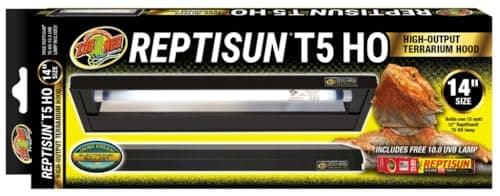
Zoo Med ReptiSun 10.0 UVB T5 HO
A widely available, cost-effective high-output T5 fluorescent designed to deliver reliable UVB for desert and semi-arid reptiles, the ReptiSun 10.0 balances performance and price for many hobbyists. Compared with the higher-spec Arcadia tubes it offers slightly lower peak UVB but greater affordability and broad retail availability, making it a practical first-choice for enclosures that need even linear coverage rather than a single intense point source.
What the Science Says About UVB and High Output Tubes
Scientific research and veterinary guidance consistently show that appropriate UVB exposure is essential for many reptiles and amphibians to synthesize vitamin D3, regulate calcium metabolism, and avoid metabolic bone disease. High output fluorescent tubes extend effective UVB coverage at higher basking distances, but correct choice and positioning are critical to balance benefit and safety. The following beginner-friendly points summarize key findings and practical implications.
Vitamin D3 synthesis: Peer-reviewed studies confirm that UVB wavelengths (primarily 290–320 nm) enable cutaneous conversion of 7-dehydrocholesterol to vitamin D3, which is central to calcium absorption and bone health.
Dose and distance matter: Research and manufacturer spectrometry data show UVB intensity drops rapidly with distance. High output (HO) T5 tubes maintain useful intensities at greater heights than standard T8 tubes, making them suitable for taller or high-basking enclosures.
Spectrum quality versus percentage labels: Scientific teams recommend using products with measured spectral output or independent lab reports rather than relying solely on percentage figures. The overall spectral distribution and irradiance at the animal’s basking site determine effectiveness.
Photoperiod and behavior: Studies emphasize that combining appropriate photoperiods, UVB exposure, and temperature gradients produces healthier behavioral and physiological outcomes compared with UVB or heat alone.
Degradation and replacement: UVB output degrades with time even if visible light appears unchanged. Veterinary and manufacturer guidance typically recommends replacing fluorescent UVB tubes every 6 to 12 months depending on use and measured output.
Reflectors and fixture choice: Reflectors can increase usable UVB by redirecting light into the enclosure. Lab measurements indicate reflective fixtures can provide more even coverage and reduce the need to place tubes dangerously close to animals.
Safety and monitoring: Overexposure risks are low when lights are installed correctly, but keepers should monitor behavior, consult reptile-experienced veterinarians, and use meters or manufacturer guidance to confirm appropriate irradiance.
Frequently Asked Questions
What is the best high output uvb fluorescent tubes for reptiles and amphibians in USA in 2026?
As of April 2026, Zoo Med ReptiSun 10.0 UVB T5 HO is the top choice for high output uvb fluorescent tubes for reptiles and amphibians in USA. A widely available, cost-effective high-output T5 fluorescent designed to deliver reliable UVB for desert and semi-arid reptiles, the ReptiSun 10.0 balances performance and price for many hobbyists. Compared with the higher-spec Arcadia tubes it offers slightly lower peak UVB but greater affordability and broad retail availability, making it a practical first-choice for enclosures that need even linear coverage rather than a single intense point source.
What are the key features of Zoo Med ReptiSun 10.0 UVB T5 HO?
Zoo Med ReptiSun 10.0 UVB T5 HO features: Provides 10% UVB in a T5 HO format suitable for many desert reptiles and UVB-needing amphibians., Slim T5 tube fits standard fixtures and delivers even UVB distribution across the enclosure., Balanced UVA/UVB spectrum with a recommended replacement interval (roughly 9–12 months depending on use)..
How much does Zoo Med ReptiSun 10.0 UVB T5 HO cost?
Currently in 2026, Zoo Med ReptiSun 10.0 UVB T5 HO is priced at $59.98.
What are the benefits of Zoo Med ReptiSun 10.0 UVB T5 HO?
The main benefits include: High UVB output, Slim T5 fit, Feels like desert-sun.
How does Zoo Med ReptiSun 10.0 UVB T5 HO compare to Arcadia D3+ 12% UVB T5?
Based on April 2026 data, Arcadia D3+ 12% UVB T5 has a higher rating (4.6/5 vs 4.4/5). However, Zoo Med ReptiSun 10.0 UVB T5 HO offers competitive value with Provides 10% UVB in a T5 HO format suitable for many desert reptiles and UVB-needing amphibians., at a price 8% lower, making it a better choice for budget shoppers.
Conclusion
In the American context, these top five high output UVB options deliver the range of choices keepers need for desert and high-basking species. Zoo Med ReptiSun 10.0 UVB T5 HO provides a reliable, widely available option for many species; Arcadia D3+ 12% UVB T5 combines high verified output with spectral balance and is the best overall choice for American keepers seeking a lab-informed balance of safety and performance; Exo Terra Intense Basking Spot UVB 150 is a focused option for targeted basking spots; Zoo Med PowerSun UV 160W offers a powerful halogen-style combined heat and UV option for specialist setups; and Arcadia Dragon 14% UVB T5 supplies very high output for extreme desert requirements. I hope you found what you were looking for — you can refine or expand your search by species, enclosure height, fixture compatibility, or by using the site search to compare replacement intervals and measured output data.