2025 Expert Guide: Top 5 Bike Computers and GPS Units in the USA — Which Model Suits Your Ride?
Published on Monday, August 25, 2025
High-precision GPS bike computers and head units combine accurate positioning, turn-by-turn navigation, route tracking, performance metrics, and detailed mapping into purpose-built devices for cyclists. Whether you prefer a touchscreen or button interface, these units integrate with smartphones, wireless sensors (ANT+/Bluetooth), power meters, and training apps to deliver real-time data and post-ride analysis. In American markets, consumer preferences are shaped by long distances between services in remote areas, variable weather, multi-surface riding (road, gravel, singletrack), and a strong culture of fitness and endurance cycling. Riders prioritize battery life and reliability for long tours, responsive mapping and multi-band GNSS for accuracy under tree canopy and in urban canyons, clear readouts and simple UI for distracting less while riding, and robust ecosystem support for updates and third-party sensors. Value-minded buyers also weigh firmware support, warranty and community resources when choosing a head unit.
Top Picks Summary
Garmin Edge 1040 Solar
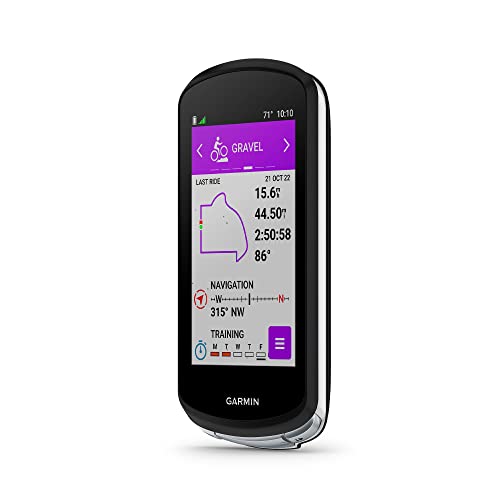
The Edge 1040 Solar is positioned as the flagship bike computer/GPS unit for endurance riders thanks to its solar-augmented battery and top-tier navigation and training feature set; the extended runtime reduces the need for frequent charging and offsets its premium price over entry models. Compared with the other units in this list it leads on multi-band GNSS accuracy and comprehensive route planning, while commanding a higher upfront cost that many long-distance cyclists find justified by reduced downtime and richer analytics.
Wahoo ELEMNT ROAM V2
The ELEMNT ROAM V2 earns its place as a market leader for riders who value a very intuitive setup and turn-by-turn routing without the complexity of some full-featured GPS units, delivering excellent value for its feature set. Against the Garmin 1040 and Edge 840 it trades off some advanced training metrics and ultra-long battery options for a simpler, faster user experience and generally lower cost to own, making it a sensible choice for riders who prioritize ease-of-use in a bike computer and GPS unit.

Garmin Edge 840
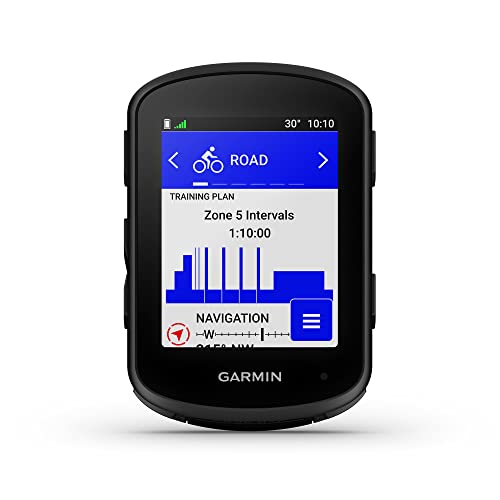
The Edge 840 is the compact, more affordable counterpart in Garmin's bike computer lineup, offering many of the navigational and training capabilities of the 1040 in a smaller, lighter package that appeals to road and gravel riders. It provides a financial and practical middle ground compared to the premium 1040 Solar and the simpler Wahoo/BOLT models—delivering advanced maps and performance metrics without the higher cost or larger footprint of the flagship unit.
Hammerhead Karoo 2
The Karoo 2 stands out as the most smartphone-like bike computer/GPS unit with a high-resolution, responsive touchscreen and excellent map rendering, making route visualization and on-device interactions particularly smooth for cyclists who want a modern UI. Compared with the Garmins and Wahoos it often wins on display clarity and third‑party app-like flexibility, though it typically sacrifices some battery longevity and the extensive training analytics that come with established cycling ecosystems.

Wahoo ELEMNT BOLT V2
The ELEMNT BOLT V2 is the value-oriented aerodynamic option for racers and time-trialists who need a compact, reliable GPS bike computer without premium navigation frills; its lower price and focused feature set make it a strong financial choice for riders on a budget. Versus the larger ROAM or Garmin models it forgoes detailed mapping and some advanced metrics, but delivers accurate ride data, simple setup, and the smallest investment among these best-in-class bike computers and GPS units.

What research and evidence say about bike computers and GPS benefits
A growing body of sports science and applied research supports the practical benefits of bike computers and integrated GPS units for safety, training efficiency, and route planning. Studies and technical analyses highlight how accurate GNSS positioning paired with power, heart rate, and cadence data improves training precision, while reliable navigation reduces cognitive load and route-related stress. Sensor fusion (combining GNSS with wheel sensors, barometers, and multi-band satellite reception) measurably increases location stability and elevation accuracy in challenging environments, which matters for performance metrics and navigation in the USA.
Power-based training tracked on bike computers helps structure workouts and track progress; peer-reviewed sports science literature links structured power training to measurable performance gains.
Multi-band GNSS and sensor fusion reduce positional error under canopy or in urban environments, improving route accuracy and elevation readings compared with single-band GPS.
Turn-by-turn mapping and clear on-device prompts correlate with fewer navigation errors and reduced cognitive distraction versus using a phone alone, improving safety on unfamiliar routes.
Integration with wireless sensors (ANT+/Bluetooth) enables real-time physiological feedback (heart rate variability, cadence, power) that supports tailored training and recovery decisions.
Longer battery life and solar-assisted charging extend ride time in remote American regions, reducing the risk of navigation failure on long tours.
Frequently Asked Questions
Should I choose Garmin Edge 1040 Solar for endurance rides?
Choose the Garmin Edge 1040 Solar if you ride endurance events, because it has integrated solar charging to extend long rides, plus comprehensive training metrics, safety features, and live tracking; it’s rated 4.6 and costs $699.99 USD(20% off).
What exact navigation features are on Wahoo ELEMNT ROAM V2?
The Wahoo ELEMNT ROAM V2 includes turn-by-turn routing with on-device maps and smart recalculation, plus a user-friendly button interface and a large clear screen optimized for navigation; it’s rated 4.4 and priced at $452.42 USD
Is Garmin Edge 840 cheaper than Wahoo ELEMNT ROAM V2?
Yes—Garmin Edge 840 costs $449.99 USDversus the Wahoo ELEMNT ROAM V2 at $452.42 USDand the Edge 840 still includes full mapping and cycling-specific routing with ClimbPro, plus advanced performance metrics and multi-band GPS.
What does Garmin Edge 1040 Solar include for longer battery life?
Garmin Edge 1040 Solar specifically adds a long battery life with integrated solar charging to extend long rides; it’s rated 4.6 and lists for $699.99 USD(20% discount). Warranty duration isn’t provided in the available data.
Conclusion
In USA’s varied riding environments, the right bike computer balances accuracy, battery life, and ecosystem fit. The five units highlighted here — Garmin Edge 1040 Solar, Wahoo ELEMNT ROAM V2, Garmin Edge 840, Hammerhead Karoo 2, and Wahoo ELEMNT BOLT V2 — cover the range from long-distance endurance and solar-boosted autonomy (Garmin Edge 1040 Solar) to intuitive mapping (Wahoo ELEMNT ROAM V2), compact but capable options (Wahoo ELEMNT BOLT V2), advanced routing and touchscreen clarity (Hammerhead Karoo 2), and a mid-range feature set with strong training tools (Garmin Edge 840). For most American riders who need mapping, battery endurance and robust ecosystem support, the Garmin Edge 1040 Solar is the most broadly suitable choice among these five. We hope you found what you were looking for; use the search to refine by features, price, or expand to accessories and sensor compatibility if you want more targeted recommendations.