Best Sleep Monitoring Smart Rings in the USA — Top 6 for 2026
Published on Thursday, February 26, 2026
Sleep Monitoring Smart Rings are the latest breakthrough in wearable technology, offering precise tracking of sleep patterns and actionable insights into sleep quality. In the USA, growing awareness of sleep's role in mental and physical health has driven strong consumer interest in small, comfortable wearables that record nocturnal data without the bulk of wrist devices. These smart rings combine optical sensors, motion detection, and temperature or skin-contact sensors with intuitive mobile apps to deliver metrics such as total sleep time, sleep stages, heart rate variability, and sleep efficiency. American buyers value a discreet form factor, long battery life, reliable data accuracy, tight privacy controls, and seamless integration with health ecosystems like Apple Health and Google Fit. The category appeals across demographics — from shift workers and fitness enthusiasts to parents and older adults — because smart rings enable continuous, passive monitoring that helps users detect patterns, improve sleep habits, and make better lifestyle decisions.
Top Picks Summary
Oura Ring Gen 4
Oura Ring Gen 4 is widely regarded as the best-in-class sleep monitoring ring thanks to its mature sleep-staging algorithms, multi-sensor suite (HR, HRV, skin temperature, SpO2) and research-backed accuracy that outperforms many rivals on night-to-night sleep insights. It commands a premium price and optional subscription for advanced metrics, but that cost buys clinical-grade analysis and a polished app experience that other rings (which may prioritize ecosystem integration or low price) don’t consistently match.

Samsung Galaxy Ring
The Samsung Galaxy Ring positions itself as a market leader by combining solid sleep tracking with deep integration into the Galaxy ecosystem — delivering seamless data continuity with phones, watches and health services while often undercutting premium competitors on bundled value. Technically it competes with Oura on sensors and algorithms but differentiates through on-device features, broader retail reach and aggressive pricing offers for existing Samsung customers.

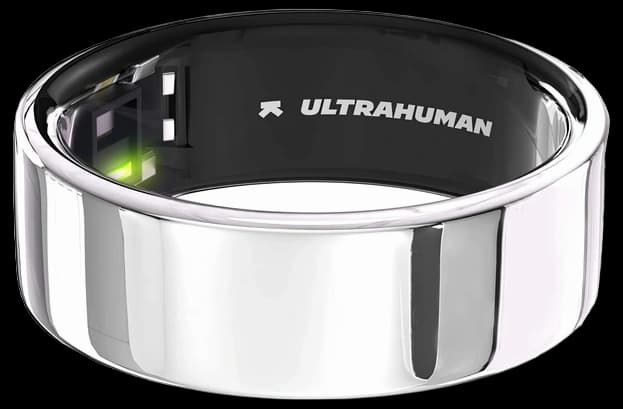
Ultrahuman Ring Air
Ultrahuman Ring Air targets users who want lightweight comfort plus actionable sleep and metabolic insights, blending decent sleep-stage detection with readiness and recovery metrics tuned for active lifestyles. It tends to be more affordable than premium contenders and pairs well with Ultrahuman’s metabolic and fitness subscriptions, making it a strong choice for users prioritizing performance-driven coaching over clinical-level sleep research.
$149-199
RingConn Smart Ring
RingConn Smart Ring is a value-oriented option that emphasizes affordability and practical sleep tracking, appealing to users who want basic nightly metrics and open data export without the premium subscription costs. While its sleep algorithms and sensor fidelity are generally less refined than Oura or Samsung, RingConn’s lower price and openness make it an attractive entry-level or experimental choice for hobbyists and developers.

Amazfit Helio Ring
Amazfit Helio Ring delivers competitive battery life and reliable baseline sleep monitoring at a lower price point, reflecting Amazfit’s market approach of strong hardware for budget-conscious buyers. It provides solid nighttime tracking and sleep-stage summaries but lacks some of the advanced analytics and validation found in top-tier rings, making it a cost-efficient alternative for users who prioritize endurance and value over clinical depth.

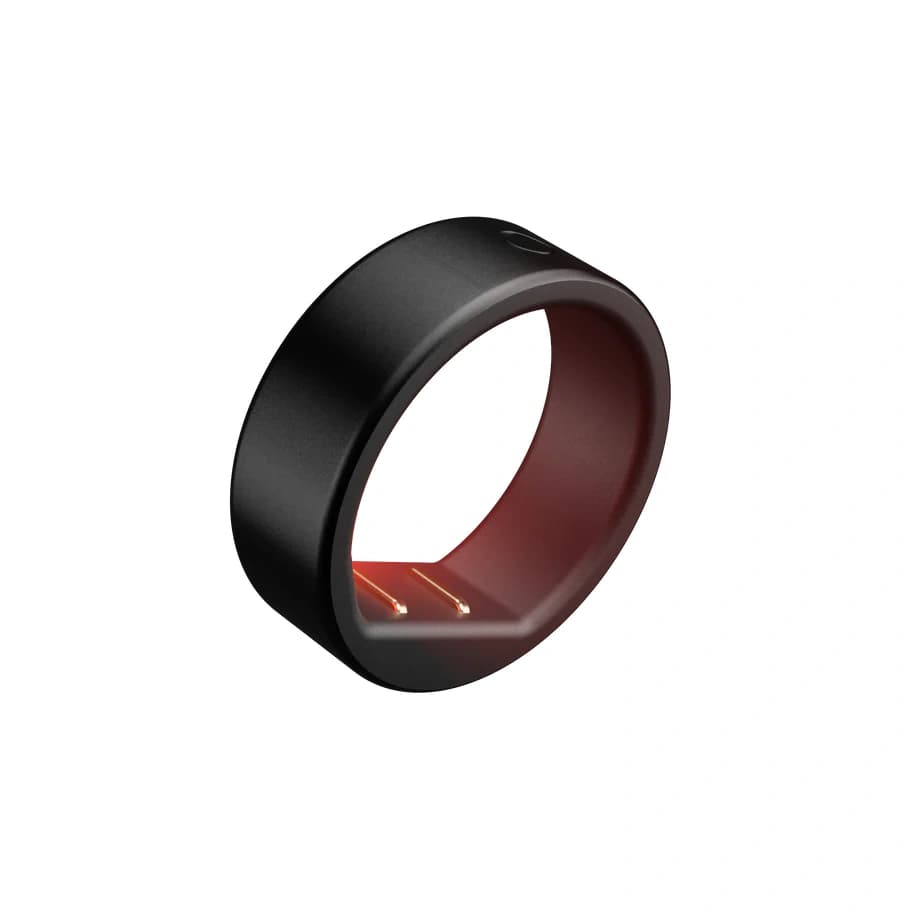
Circular Ring Slim
Circular Ring Slim focuses on a minimalist, ultra-thin design that maximizes comfort for all-night wear while offering robust sleep-tracking features and targeted coaching. It occupies a middle ground financially and technically—more refined in form factor than many budget rings and more affordable than the highest-end models—appealing to users who prioritize continuous wearability and elegant design alongside dependable sleep insights.
$199-299
How Science Supports Sleep Monitoring Smart Rings
Smart rings rely on a mix of sensors and algorithms to estimate sleep and related physiology. Optical photoplethysmography (PPG) measures pulse and heart rate variability, accelerometers detect movement and wake/sleep transitions, and some rings add temperature or skin-contact sensors to improve sleep-stage estimation. Peer-reviewed research and validation studies have demonstrated that modern wearable sensors, when paired with robust algorithms, can approximate total sleep time and detect awakenings with useful accuracy compared with laboratory polysomnography and field actigraphy. At the same time, limitations remain in differentiating specific sleep stages precisely for every individual. For practical use, the strongest benefits come from longitudinal trend detection, personalized baselines, and combining sleep metrics with daytime activity and recovery markers.
Wearable sensors can reliably estimate sleep duration and sleep/wake transitions; they are generally less precise than overnight polysomnography but well suited for everyday monitoring.
Heart rate and heart rate variability (HRV) provide validated proxies for autonomic balance and recovery, which correlate with sleep quality and stress.
Temperature and respiration trends, when available, add meaningful context for detecting circadian shifts and disturbances.
Algorithms trained on large, diverse datasets improve accuracy over time; regular firmware and app updates can materially affect device performance.
Long-term trends are more actionable than single-night scores: patterns across weeks reveal consistent sleep deficits, recovery needs, or the impact of lifestyle changes.
Users should consider privacy and data-sharing policies; secure handling of health data is a core consideration when choosing a device.
Frequently Asked Questions
Which ring should I buy for accurate sleep insights?
Oura Ring Gen 4 is the best pick for accurate sleep insights because it uses advanced sleep staging with sensors for heart rate, HRV, SpO2, and skin temperature, with an average rating of 4.6.
What sensors does Oura Ring Gen 4 track for sleep?
Oura Ring Gen 4 tracks heart rate, HRV, SpO2, and skin temperature for advanced sleep staging, and it includes a readiness score with personalized recovery recommendations in its app ecosystem.
Is Samsung Galaxy Ring cheaper than Oura Ring Gen 4?
Yes—Samsung Galaxy Ring costs $399.95 USDversus Oura Ring Gen 4 at $349.00 USDwhile still offering sleep staging sync in Samsung Health for sleep, SpO2, and heart-rate data with a 4.3 rating.
Will Galaxy Ring work best if I have a Galaxy phone?
Samsung Galaxy Ring is designed for deep integration with Samsung Health to sync sleep staging, SpO2, and heart-rate data, with on-device HRV and sleep-cycle insights optimized for Galaxy device users; it’s rated 4.3.
Conclusion
This category brings together high-end sensors, polished apps, and comfortable designs that make continuous sleep monitoring accessible to more Americans. The six standout options covered here offer different strengths: Oura Ring Gen 4 (best overall for balanced accuracy, app depth, and ecosystem integration), Samsung Galaxy Ring (strong hardware and Android-first features), Ultrahuman Ring Air (lightweight design and fitness-focused insights), RingConn Smart Ring (value-oriented tracking and ergonomic fit), Amazfit Helio Ring (budget-conscious option with core metrics), and Circular Ring Slim (compact profile and long battery life). We hope you found the information you were looking for. If you want to refine or expand your search by price, battery life, platform compatibility, or advanced metrics, use the site search to narrow results or explore alternatives.