Appareils réseau aux États-Unis - top 5 des options pour 2026
Published on Monday, January 26, 2026
Les appareils réseau regroupent les routeurs, commutateurs, points d'accès, modems, systèmes maillés et adaptateurs réseau qui connectent les foyers, les entreprises et les espaces publics. Sur le marché américain en 2026, la demande est tirée par le télétravail, l'adoption des maisons connectées, l'essor de la 5G et du fixe sans fil, le déploiement du Wi‑Fi 6E et du Wi‑Fi 7, ainsi que le besoin d'une meilleure sécurité et confidentialité. Les consommateurs privilégient une couverture fiable, une faible latence pour les visioconférences et le jeu en ligne, des fonctions de sécurité robustes, une configuration et une gestion simples via applications mobiles ou consoles cloud, et une efficacité énergétique. Les acheteurs professionnels recherchent l'évolutivité, la gestion centralisée (réseaux gérés dans le cloud), des capacités SD‑WAN et un fort support pour l'IoT et l'informatique en périphérie. Comme les préférences varient fortement selon le cas d'usage et l'environnement, il n'existe pas un ensemble d'appareils universellement meilleur pour tous ; les acheteurs choisissent en fonction des besoins de couverture, du nombre d'appareils, des exigences de sécurité, du budget et du choix entre des solutions grand public plug-and-play ou du matériel professionnel géré.
Top Picks Summary
ASUS RT-AX86U Pro
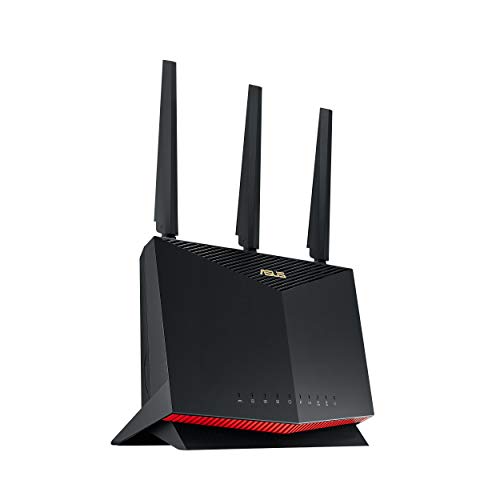
Le ASUS RT-AX86U Pro se distingue comme un routeur Wi-Fi 6 hautes performances de premier plan pour les gamers et les utilisateurs intensifs, offrant une latence réduite, une excellente couverture en unité unique et des fonctions avancées de QoS et de sécurité. Par rapport aux modèles orientés mesh comme Orbi et Deco, il propose une solution autonome plus abordable et riche en fonctionnalités, avec une puissance CPU solide et la prise en charge d'AiMesh pour une expansion flexible, ce qui en fait un choix rentable lorsque le débit brut et l'optimisation pour le jeu sont prioritaires dans la catégorie des équipements réseau.
Netgear Orbi RBK863S
Le Netgear Orbi RBK863S est le leader du marché des systèmes maillés Wi-Fi 6E pour toute la maison, offrant des performances tri-bande, un backhaul dédié et une couverture étendue, idéal pour les grandes propriétés ou les habitations à plusieurs niveaux. Bien qu'il soit proposé à un prix supérieur aux routeurs mono-appareil comme l'ASUS RT-AX86U Pro et aux options maillées économiques telles que le TP-Link Deco XE75, son débit supérieur et la gestion simplifiée du réseau maillé justifient le surcoût pour les utilisateurs recherchant une connectivité sans coupure sur de vastes zones.

TP-Link Deco XE75
Le TP-Link Deco XE75 offre un excellent rapport qualité-prix en tant que système mesh Wi-Fi 6E milieu de gamme, alliant les performances du 6E moderne à une configuration conviviale et un tarif attractif par rapport à l'Orbi RBK863S. Pour les acheteurs cherchant le spectre de nouvelle génération sans la complexité des solutions professionnelles, le Deco XE75 se positionne sous le prix de nombreux meshes haut de gamme tout en fournissant une couverture compétitive et un support multi-appareils, ce qui en fait une alternative pratique pour une mise à niveau complète du domicile à budget maîtrisé.

Ubiquiti UniFi dream router
Le routeur Ubiquiti UniFi Dream est conçu pour les prosommateurs et les petites entreprises qui ont besoin de fonctionnalités réseau de niveau entreprise dans un appareil compact, offrant des VLAN avancés, des contrôles de trafic approfondis et une intégration transparente dans l'écosystème UniFi. Contrairement aux routeurs maillés et destinés aux joueurs grand public, il privilégie la gestion centralisée puissante et l'évolutivité plutôt que la simplicité prête à l'emploi, ce qui se traduit souvent par une meilleure valeur financière à long terme pour les déploiements gérés d'équipements réseau malgré une courbe d'apprentissage plus prononcée.

Linksys Hydra Pro 6E
Le Linksys Hydra Pro 6E offre une large compatibilité Wi-Fi 6E et un débit concurrent élevé pour les foyers multi-appareils, garantissant des performances sans fil rapides qui rivalisent avec d'autres modèles compatibles 6E tout en se positionnant souvent sur un segment de prix moyen à élevé. Comparé au RT-AX86U Pro d'ASUS orienté gaming et au UniFi Dream Router axé entreprise, le Hydra Pro 6E privilégie des performances grand public simples et efficaces avec une prise en charge moderne du spectre, ce qui en fait un choix solide pour les utilisateurs recherchant de la vitesse sans fil brute et une solution pérenne pour leur réseau.

Ce que la recherche et les normes disent sur les avantages des appareils réseau
Les recherches scientifiques, les organismes de normalisation et les tests en laboratoires indépendants ont quantifié comment les technologies réseau modernes améliorent le débit, la fiabilité et la sécurité. Des normes clés comme IEEE 802.11ax (Wi‑Fi 6), 802.11be (Wi‑Fi 7) et 3GPP pour la 5G décrivent des évolutions techniques qui se traduisent par des bénéfices concrets : un débit global plus élevé, de meilleures performances en environnement dense, une latence réduite et une meilleure efficacité spectrale. Les cadres de sécurité et les bonnes pratiques d'organisations comme NIST, ainsi que des évaluations indépendantes (Consumer Reports, laboratoires accrédités), démontrent l'importance des mises à jour du firmware, des standards de chiffrement solides et des configurations par défaut sécurisées pour réduire les risques.
Les normes Wi‑Fi 6 et Wi‑Fi 7 augmentent le débit et l'efficacité dans les environnements encombrés grâce à des technologies comme l'OFDMA et l'opération multi‑liens (MLO), améliorant les performances pour les foyers et bureaux avec de nombreux appareils (analyses techniques IEEE).
Le réseau maillé et l'utilisation de plusieurs points d'accès réduisent les zones mortes et assurent un débit plus homogène dans les grandes maisons et les petites entreprises, comme le montrent les tests comparatifs de couverture réalisés par des laboratoires indépendants.
Le SD‑WAN et les réseaux gérés dans le cloud offrent une meilleure fiabilité et un contrôle centralisé pour les lieux de travail distribués, avec des études de cas démontrant une simplification des opérations et des économies pour les réseaux d'entreprise.
Le fixe sans fil 5G et les options hybrides haut débit proposent des temps d'installation réduits et des débits compétitifs dans les zones sans fibre, soutenus par les études de couverture de la FCC et les rapports de déploiement des opérateurs.
Les cadres de sécurité et les bonnes pratiques issus de NIST et des chercheurs en sécurité indépendants soulignent la valeur des mises à jour régulières du firmware, du chiffrement WPA3, de la segmentation du réseau et de l'authentification multifacteur pour les interfaces de gestion afin de réduire l'exposition aux vulnérabilités.
Frequently Asked Questions
Which router should I buy for gaming and low latency?
The ASUS RT-AX86U Pro is the ideal choice for gamers because it features a 2.5 Gbps multi-gig port and adaptive QoS to prioritize gaming traffic for reduced latency.
Does the ASUS RT-AX86U Pro support 160 MHz channels?
Yes, the ASUS RT-AX86U Pro supports Wi-Fi 6 dual-band connections with 160 MHz channel width to ensure high-speed performance for intensive users.
Is the TP-Link Deco XE75 cheaper than the Netgear Orbi RBK863S?
The TP-Link Deco XE75 is significantly more affordable at $188.09 USDwhereas the Netgear Orbi RBK863S is priced at $799.00 USDfor its high-performance tri-band Wi-Fi 6E system.
Can I use the ASUS RT-AX86U Pro with other mesh nodes?
The ASUS RT-AX86U Pro is fully compatible with AiMesh, allowing you to integrate it into a centralized mesh network for expanded coverage throughout your home.