Top 7 Collaborative Warehouse Robots in the USA for 2026
Published on Thursday, February 26, 2026
Collaborative Warehouse Robots, or cobots, are reshaping logistics and supply chains across the United States by working safely alongside human operators to boost warehouse throughput and accuracy. These autonomous mobile robots and collaborative robot arms are designed for routine tasks such as picking, sorting, transport, and pallet handling, offloading repetitive and ergonomically demanding work from people. U.S. buyers favor cobots for their adaptability, ease of deployment, and clear impact on operational metrics: faster order processing, fewer errors, reduced worker strain, and improved space utilization. As labor markets tighten and customer expectations for rapid fulfillment grow, cobots offer a scalable automation strategy that integrates with existing warehouse systems while preserving human oversight and flexibility.
Top Picks Summary
Universal Robots UR10e
The UR10e is a highly versatile and collaborative robot that offers extended reach and payload capacity, making it ideal for a wide range of applications from assembly to packaging. It features advanced safety features, enabling it to work alongside human operators without the need for safety cages. Its user-friendly programming interface allows for quick set-up, even for users with no robotics experience. With its robust design and precision, the UR10e stands out as a leading solution in the collaborative robot market.

Fanuc CRX-10iA
The FANUC CRX-10iA is a 10 kg-payload collaborative robot arm built for safe, repeatable pick-and-place, packing and kitting tasks at workstation scale. It earns its place by delivering high precision, certified safety features and long service life that lower per-task costs compared with fleet-wide AMR deployments, and it excels where fixed-station dexterity and cycle-time consistency are critical. Versus Locus, 6 River and Fetch AMRs, the CRX-10iA complements mobile robots by automating station work that mobile platforms cannot economically or safely replace.

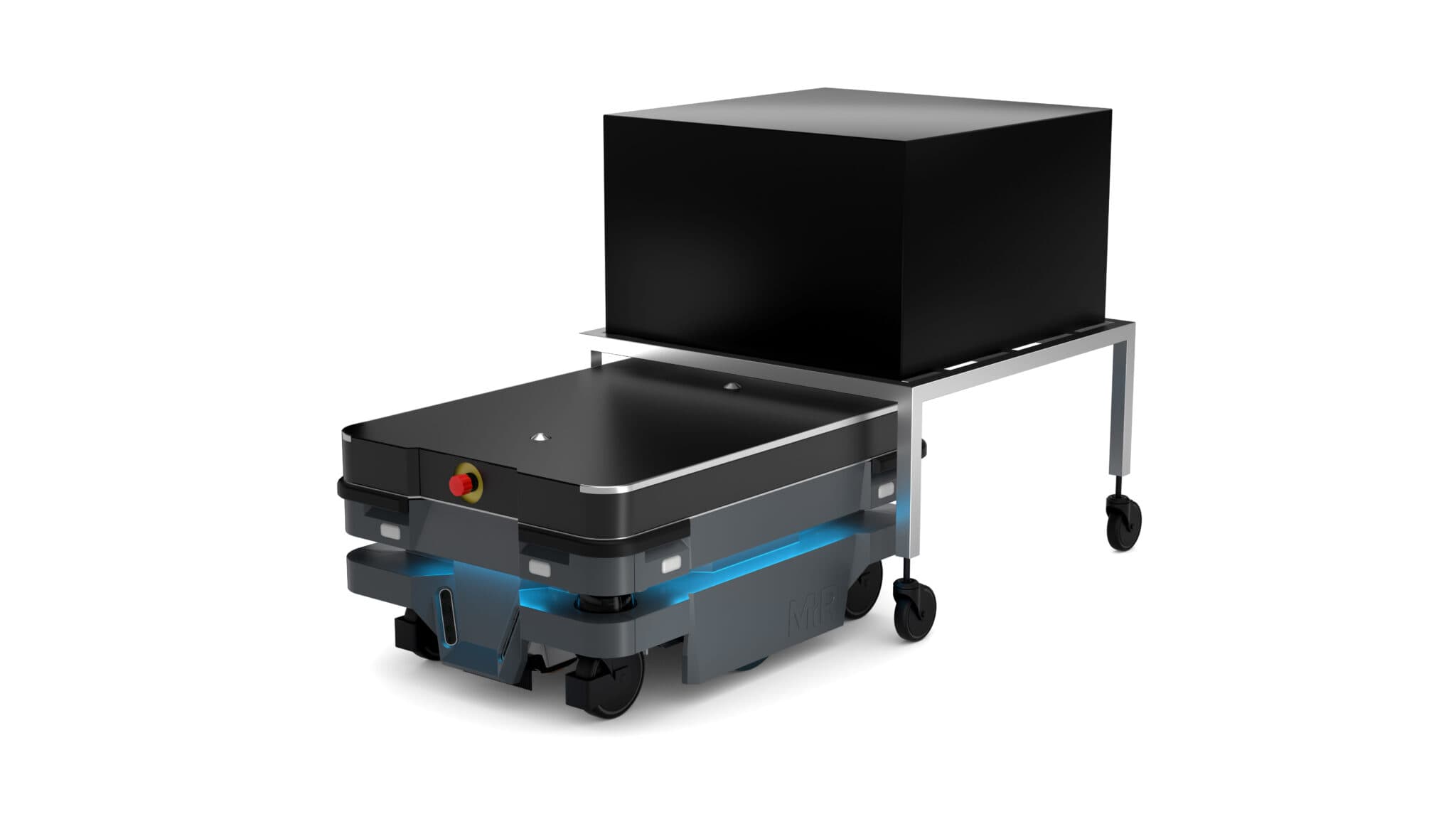
Mobile Industrial Robots MiR250
The MiR250 is a compact autonomous mobile robot that excels in transporting goods within a variety of environments. With its advanced navigation capabilities, it can easily move around obstacles and map its surroundings. The MiR250 can be configured with different payload options, making it suitable for a range of applications from manufacturing to healthcare. Its user-centered design and ease of use set it apart, offering significant improvements in efficiency and workflow.
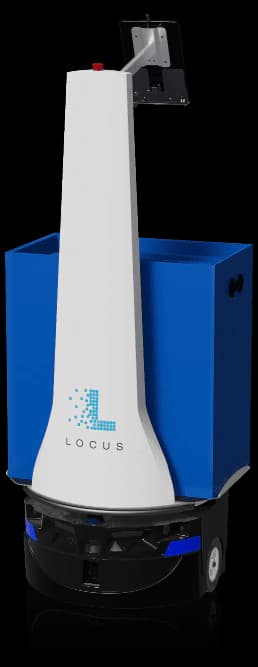
Locus Robotics Origin
Locus Robotics Origin is a purpose-built collaborative AMR fleet optimized for unit-level picking with real-time fleet orchestration and tight WMS integration. It holds a market-leader position for throughput per square foot and incremental scalability, typically delivering faster ROI for high-volume e-commerce flows than heavy fixed automation or single-purpose cobots. Compared with 6 River's Chuck and Fetch’s Freight500, Origin emphasizes dense multi-robot coordination and pick productivity rather than single-robot assistance or heavy bulk transport.
$35,000-70,000
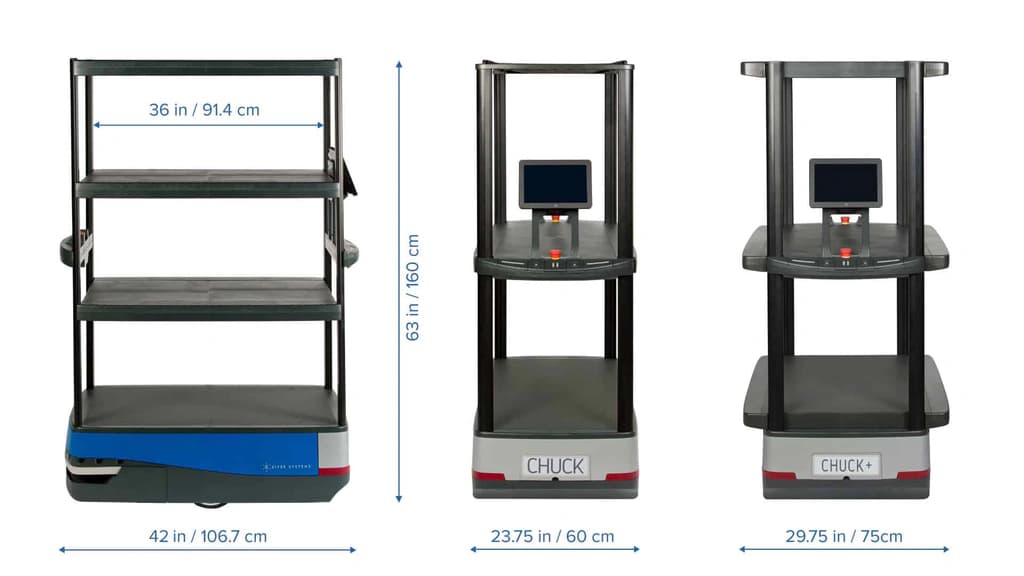
6 River Systems Chuck
Chuck by 6 River Systems is a human-centric collaborative AMR that guides pickers through aisles with simple UI and real-time task assistance. Its advantage is rapid, low-friction deployment and a cost-effective lift in individual picker productivity, making it attractive for operators seeking quick payback without committing to a large, tightly integrated fleet. Against FANUC's CRX-10iA and Locus Origin, Chuck focuses on in-aisle collaboration and incremental automation of existing workflows rather than high-precision station automation or full-scale fleet orchestration.
$40,000-65,000
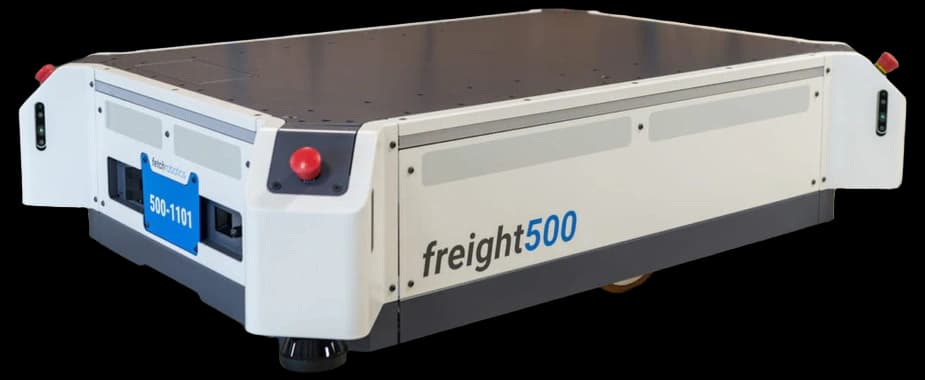
Fetch Robotics Freight500
Fetch Robotics Freight500 is a heavy-duty collaborative AMR designed for pallet, cart and dock-to-floor transport with high payload capacity and modular decks. It stands out by replacing forklifts and conveyor segments with autonomous tugs that reduce labor and infrastructure costs at scale, offering enterprise fleet telemetry and robust navigation for mixed-robot workflows. Compared to the lighter Chuck and Locus Origin or the station-focused FANUC arm, Freight500 targets bulk material movement and throughput-heavy lanes where moving mass, not individual picks, drives ROI.
$25,000-55,000
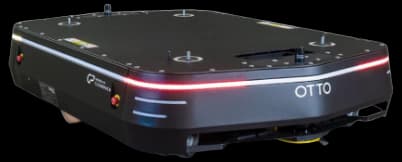
OTTO Motors OTTO 1500
The OTTO 1500 is a highly capable autonomous mobile robot designed for heavy-duty material handling in manufacturing facilities. It can transport large loads up to 1500 lbs efficiently and safely while navigating complex environments effortlessly. Equipped with advanced sensors and mapping technology, the OTTO 1500 can avoid obstacles and recharge autonomously. Its ability to integrate with existing workflows makes it a leader in the AMR market, greatly enhancing operational productivity.
100,000-120,000$
Why Research Supports Collaborative Warehouse Robots
Multiple lines of research and industry case studies show that collaborative robots deliver measurable benefits in warehouse settings. Academic labs, workplace safety agencies, and supply chain analysts have evaluated cobot deployments and reported improvements in productivity, ergonomics, and return on investment. These findings help operations managers and procurement teams understand where cobots add the most value and how to plan phased rollouts that reduce risk and maximize gains.
Productivity gains: Industry case studies and analyses indicate that integrating collaborative robots into picking and transport workflows commonly yields faster pick rates and higher throughput compared with manual-only operations.
Ergonomics and safety: Research from occupational safety organizations documents reductions in repetitive strain and manual handling injuries when cobots handle heavy, repetitive, or awkward tasks under human supervision.
Return on investment: Real-world deployments from distribution centers show typical payback periods ranging from several months to a few years depending on use case, scale, and process optimization.
Flexibility and integration: Studies and vendor reports highlight that modern cobots are easier to reprogram and redeploy than traditional automation, making them a good fit for warehouses with variable SKU mixes and seasonal demand.
Human-robot collaboration: Academic research from robotics and human factors groups demonstrates that well-designed human-robot interaction improves job satisfaction and maintains human oversight while increasing system reliability.
Frequently Asked Questions
Which cobot should I choose for flexible warehouse tasks?
Choose Universal Robots UR10e if you want a versatile collaborative arm for various applications, with a user-friendly programming interface and collaborative, safe operation; it also averages a 4.8 rating.
What exact payload and safety features does Fanuc CRX-10iA use?
Fanuc CRX-10iA is a 10 kg-payload collaborative robot arm with built-in safety features and force sensing for safe shared workspaces without extensive guarding.
How do the prices compare for Universal Robots UR10e, MiR250?
Universal Robots UR10e and Mobile Industrial Robots MiR250 show listingPrice 0 in the data provided, so there’s no paid price to compare—only their average ratings differ (UR10e 4.8, MiR250 4.5).
Who is Fanuc CRX-10iA for, compared to mobile MiR250?
Fanuc CRX-10iA targets close human-robot pick-and-place, packing, and kitting at workstation scale; MiR250 is an autonomous mobile robot for transporting goods with smart navigation in dynamic environments.
Conclusion
Collaborative Warehouse Robots are a practical and scalable answer to modern fulfillment challenges in the USA. The seven standout models on this page — Universal Robots UR10e, Fanuc CRX-10iA, Mobile Industrial Robots MiR250, Locus Robotics Origin, 6 River Systems Chuck, Fetch Robotics Freight500, and OTTO Motors OTTO 1500 — represent the leading balance of safety, flexibility, and proven deployments across fulfillment and distribution centers. For many warehouses focused on high-throughput order fulfillment and rapid ROI, the Locus Robotics Origin is often the best overall choice because it is purpose-built for collaborative picking and has a strong track record in large-scale operations. We hope you found the information you were looking for. If you want to refine or expand your search, use the site search to filter by payload, navigation type, integration options, or industry use case.