Top 7 4K Video Editing Workstations in the USA for 2026
Published on Thursday, February 26, 2026
4K video editing workstations are specifically engineered to tackle the demands of high-resolution video production. As 4K content becomes standard across streaming platforms, social channels, and professional film work, professional video editors, filmmakers, and content creators in the USA increasingly prefer robust workstation desktops that can handle large video files, complex timelines, and heavy effects without interruption. Modern 4K workstations deliver state-of-the-art graphics cards, multi-core processors, abundant high-speed memory, NVMe storage, and advanced cooling systems to speed up editing, rendering, and exporting. Buyers in 2026 look for a blend of raw performance, reliability, thermal efficiency, color-accurate displays or output support, expandability, and software compatibility with tools like Adobe Premiere Pro, DaVinci Resolve, and Final Cut Pro. These systems are highly valued by professionals and advanced hobbyists who need consistent, predictable throughput for 4K projects and fast turnaround times.
Top Picks Summary
Apple MacBook Pro 16-inch (M3 Max, 2024)
The 16-inch MacBook Pro (M3 Max, 2024) delivers class-leading on-device GPU compute and hardware-accelerated codecs, making it exceptional for portable 4K editing and realtime ProRes workflows. Compared with the bulkier, more expandable workstations on this list it offers superior battery life and a tightly integrated software/hardware stack that accelerates color grading and exports, though it trades off the raw expandability and ECC memory options of full-size towers.
$3,099-6,499
Dell Precision 7780
The Dell Precision 7780 is a 17-inch mobile workstation built for sustained, near-desktop 4K performance with high-end CPUs, NVIDIA RTX/A-series GPUs and ECC memory options; strong cooling and ISV certifications help it handle multi-stream timelines and long renders. Against the MacBook and creator laptops it provides greater configurability and serviceability, though top configurations can be pricier than comparable mobile rivals.

HP ZBook Fury 16 G11
The HP ZBook Fury 16 G11 balances broad GPU choices, competitive pricing and enterprise-class reliability, making it a value-minded mobile workstation for editors who need professional graphics and flexible I/O. It sits between Dell and Lenovo on configurability—often delivering similar real-world 4K editing performance for slightly less cost—while still lacking the extreme expandability and raw throughput of dedicated desktop towers.
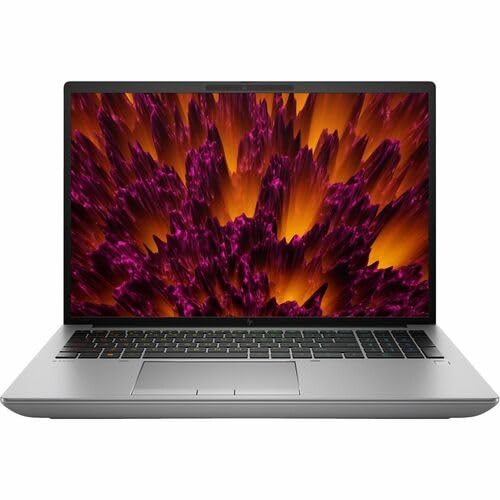
Lenovo ThinkPad P16 Gen 2
The ThinkPad P16 Gen 2 emphasizes durable build quality, enterprise manageability and steady thermal performance, offering reliable 4K editing throughput with pro GPUs and long-term driver support. Compared with HP and Dell it frequently undercuts price while prioritizing keyboard, security and serviceability for mobile post-production, though it doesn’t match the maximum expansion or memory capacity available in larger desktop workstations.

ASUS ProArt Studiobook 16 OLED
The ASUS ProArt Studiobook 16 OLED (H7604) distinguishes itself with an industry-leading OLED panel calibrated for wide color gamut and excellent out-of-the-box accuracy—critical for precise color grading of 4K footage. It pairs strong GPU choices and creator-focused utilities with competitive pricing for a color-critical laptop, while trading some enterprise-class support and chassis expandability found in traditional workstation lines.

Puget Systems Ultra Workstation
Puget Systems Ultra Workstation is a boutique, fully customizable desktop engineered and benchmark-tuned specifically for demanding 4K editors, delivering optimized cooling, component selection and real-world application performance. Compared to OEM towers it offers hands-on, project-specific tuning and support that can yield better sustained multi-GPU and I/O performance per dollar, though lead times and bespoke pricing can be higher than off-the-shelf options.
$3,499-15,000
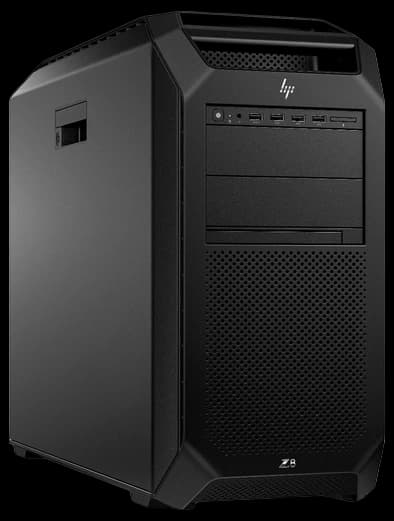
HP Z8 Fury G5 Workstation
The HP Z8 Fury G5 is a flagship dual-socket tower designed for maximal CPU cores, huge RAM capacity and multi-GPU configurations—ideal for complex 4K timelines, heavy VFX and parallel render/export workflows. It outclasses mobile and single-socket desktops in raw throughput and expandability for studio environments, but requires a higher upfront investment and is aimed at fixed-post houses rather than mobile creatives.
What research and benchmarks say about 4K workstation performance
Independent benchmarks and industry testing consistently show that certain hardware factors have the largest impact on 4K editing performance. Multi-core CPU performance, GPU acceleration, fast NVMe storage, and sufficient RAM all reduce render and export times and improve responsiveness during timeline scrubbing and real time playback with effects. Studies and lab reports from industry testers and benchmark suites demonstrate the cumulative effect of balanced systems: a strong GPU improves accelerated effects and encoding, while CPU cores and memory bandwidth influence export and multi-track performance. Thermal design also matters because sustained workloads can trigger throttling that reduces real-world throughput.
CPU cores and single-thread speed: Benchmarks show export and encoding tasks scale with core count and clock speeds, so a mix of high core count and good single-thread performance improves both rendering and responsiveness.
GPU acceleration: Tests from editing software vendors and independent labs indicate modern GPUs significantly speed up effects, color grading, and hardware-accelerated encodes.
Memory capacity and bandwidth: Research and practical tests find 32 GB is a practical baseline for 4K editing, with 64 GB or more recommended for large projects or multi-cam timelines to avoid swapping.
NVMe and storage throughput: Real-world tests show NVMe drives cut project load and cache times compared with SATA SSDs, and RAID or tiered storage helps when working with many simultaneous streams of 4K footage.
Thermal management: Lab testing highlights that consistent cooling reduces thermal throttling, maintaining sustained performance during long render sessions.
Frequently Asked Questions
Which workstation should I buy for portable 4K editing?
Choose the Apple MacBook Pro 16-inch (M3 Max, 2024) for portable 4K editing because it has hardware ProRes acceleration for smooth 4K timelines and an average rating of 4.8 at $3169.49.
What exact GPU codec acceleration does MacBook Pro M3 Max include?
The Apple MacBook Pro 16-inch (M3 Max, 2024) lists “hardware ProRes acceleration,” designed for smooth 4K timelines, and it’s rated 4.8 with a $3169.49 listing price.
Is the Dell Precision 7780 worth $3889.77 for 4K timelines?
At $3,889.77 USDthe Dell Precision 7780 gives you “ISV certification and enterprise manageability,” plus NVIDIA RTX/A-series GPU options and 4.6 average rating for sustained near-desktop 4K editing.
Does HP ZBook Fury 16 G11 offer user-upgradeable RAM and storage?
Yes—HP ZBook Fury 16 G11 includes “extensive user-upgradeable RAM and storage,” with an average rating of 4.4 and a $3,599.77 USDlisting price.
Conclusion
In the USA market for 2026, the seven systems listed here represent the leading approaches to 4K video editing: Apple MacBook Pro 16-inch (M3 Max, 2024) for a portable, highly optimized editing experience; Dell Precision 7780 for workstation-class expansion and reliability; HP ZBook Fury 16 G11 for mobile performance and ISV certification; Lenovo ThinkPad P16 Gen 2 for a balance of durability and power; ASUS ProArt Studiobook 16 OLED (H7604) for color-accurate displays and creator-focused features; Puget Systems Ultra Workstation for fully configurable, workstation-grade performance and tuning; and HP Z8 Fury G5 for maximum desktop throughput. For editors who need the most consistent, highest throughput and customization for heavy 4K workflows, the Puget Systems Ultra Workstation stands out as the best overall choice on this page. I hope you found what you were looking for. You can refine or expand your search using the site search to compare specs, pricing, and configurations.