Thermoelectric Cooler Control Units: Top 6 Picks in USA for 2026
Published on Wednesday, February 25, 2026
Thermoelectric cooler control units regulate temperature and energy management for Peltier-based cooling systems, delivering precise, compact and reliable thermal control across computer components and related applications. In the United States market, these controllers appeal to consumers and professionals because they enable fine temperature stability for CPUs, GPUs, laser diodes, sensors and lab instruments while minimizing size and moving parts. Buyers in 2026 are prioritizing energy-aware control, digital telemetry, IoT-ready interfaces and tight closed-loop regulation so they can achieve repeatable performance under fluctuating ambient conditions. The category spans simple, cost-effective controllers for hobbyist and desktop cooling setups to industrial-grade units that offer advanced PID tuning, multi-stage support and extended safety features for critical processes.
Top Picks Summary
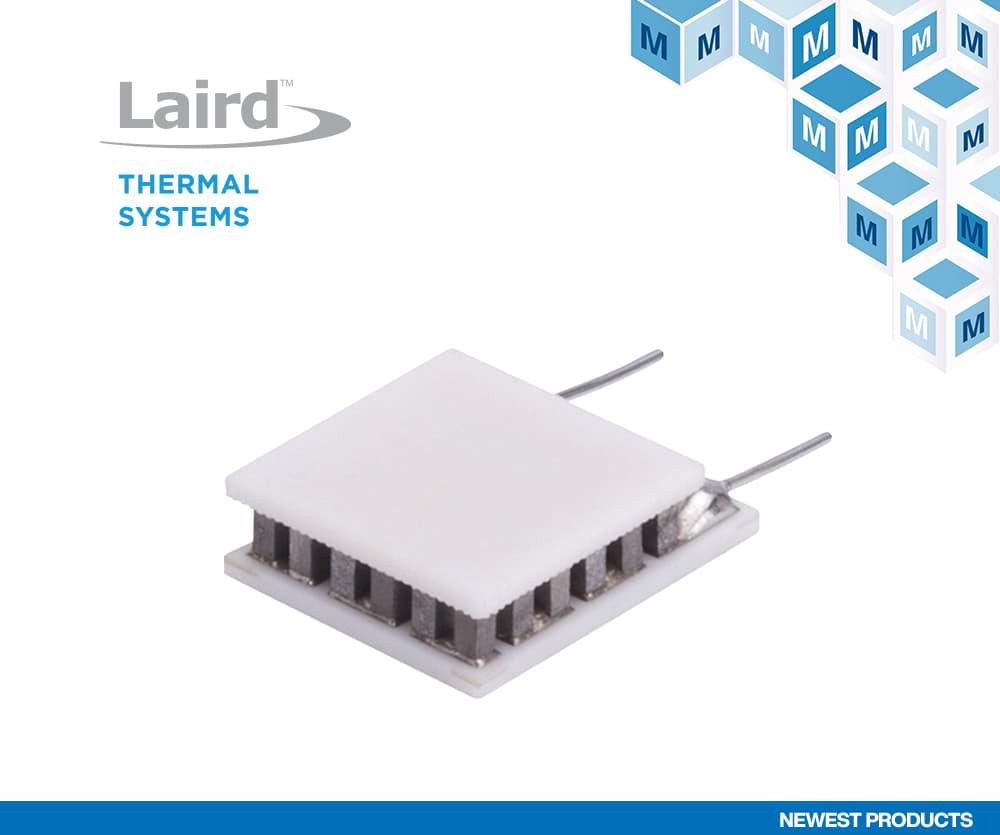
Laird Thermal Systems PR-59 Temperature Controller
The PR-59 from Laird Thermal Systems is positioned as a rugged, OEM-ready thermoelectric cooler control unit that balances broad thermal capacity with straightforward integration, making it a market leader for industrial applications where reliability and field serviceability matter. Compared with precision lab-focused units in this list (like Meerstetter and ILX), the PR-59 trades the absolute lowest-noise performance for stronger packaging, simplified installation and competitive total cost of ownership for high-volume or harsh-environment deployments.
$400-900
TE Technology TC-48-20 Temperature Controller
TE Technology's TC-48-20 is a cost-conscious, high-current TEC controller designed to drive larger modules and stacked coolers, offering one of the best price-to-current ratios among these products for industrial cooling tasks. Unlike the precision-oriented Meerstetter or Wavelength models, the TC-48-20 emphasizes raw drive capability and simplicity, making it the economical choice for system integrators needing robust throughput rather than ultra-low-noise regulation.
$250-500
Meerstetter TEC-1091 Controller
The Meerstetter TEC-1091 is a Swiss-engineered, best-in-class temperature controller focused on ultra-stable, low-noise PID regulation for sensitive scientific and metrology applications, and it stands out in this list for delivering the tightest temperature stability and advanced digital interfaces. While it carries a premium compared with more budget-oriented or industrial units (for example TE Technology or Laird), its superior regulation and response make it the preferred choice when measurement uncertainty or optical coherence must be minimized.
$2000-4500
Arroyo Instruments 5300 TEC Controller
The Arroyo Instruments 5300 is a research-oriented TEC controller that emphasizes high-resolution PID control, programmability and low-noise electronics tailored to optical laboratories and experimental setups. It competes with Wavelength and ILX by offering flexible interfacing and experimental features that benefit R&D budgets willing to trade slightly higher cost for instrument-level control and expandability.
$1800-3500
What the Research Says About Thermoelectric Cooling
Scientific and engineering studies support the practical benefits and limitations of thermoelectric cooling when paired with modern control electronics. Research in materials science has steadily improved thermoelectric element performance, while control-engineering research demonstrates that well-tuned controllers can deliver faster response, higher stability and better overall efficiency in many precision applications. The following beginner-friendly points summarize the evidence and practical implications for buyers.
Peltier-based systems provide very precise temperature control and fast response times when used with closed-loop controllers and accurate temperature sensors. Peer-reviewed studies demonstrate stability to within tenths of a degree Celsius for well-designed assemblies.
Controller architecture matters: proportional-integral-derivative (PID) controllers, adaptive PID and model-predictive approaches all improve performance. Auto-tune features reduce setup time and improve reliability for non-expert users.
Thermoelectric efficiency is improving thanks to advances in materials such as nanostructured bismuth telluride, but TECs remain less energy efficient than large vapor-compression systems for high delta-T tasks. For local, precise cooling of electronics, TECs are often the more practical solution.
Power management strategies such as PWM current control, soft-start, and staged operation minimize wasted energy and extend module life according to multiple device-level studies.
System-level design including heatsinking, airflow, and thermal interface materials has a large effect on overall coefficient of performance. Proper heat rejection is as important as the controller itself.
Emerging trends show IoT-enabled controllers and data-driven tuning delivering measurable energy savings in lab and industrial deployments by adapting setpoints and duty cycles to real operating conditions.
Frequently Asked Questions
What is the best thermoelectric cooler control units in USA in 2026?
As of April 2026, Laird Thermal Systems PR-59 Temperature Controller is the top choice for thermoelectric cooler control units in USA. The PR-59 from Laird Thermal Systems is positioned as a rugged, OEM-ready thermoelectric cooler control unit that balances broad thermal capacity with straightforward integration, making it a market leader for industrial applications where reliability and field serviceability matter. Compared with precision lab-focused units in this list (like Meerstetter and ILX), the PR-59 trades the absolute lowest-noise performance for stronger packaging, simplified installation and competitive total cost of ownership for high-volume or harsh-environment deployments.
What are the key features of Laird Thermal Systems PR-59 Temperature Controller?
Laird Thermal Systems PR-59 Temperature Controller features: Compact PID temperature controller tailored for thermoelectric coolers with fast response., Integrated TEC driver with current limiting and thermal protection for reliable operation., Front-panel display plus analog/remote inputs for setpoint control and monitoring..
What are the benefits of Laird Thermal Systems PR-59 Temperature Controller?
The main benefits include: Industrial precision, Wide-range input, Lab-tough champ.
How does Laird Thermal Systems PR-59 Temperature Controller compare to TE Technology TC-48-20 Temperature Controller?
Based on April 2026 data, Laird Thermal Systems PR-59 Temperature Controller is rated 4.8/5 while TE Technology TC-48-20 Temperature Controller is rated 4.6/5. Both are excellent choices, but Laird Thermal Systems PR-59 Temperature Controller stands out for Compact PID temperature controller tailored for thermoelectric coolers with fast response..
Conclusion
This overview highlights the most relevant thermoelectric cooler control units available in the USA for 2026, with a range of options for hobbyists, system integrators and industrial users. The featured models are Laird Thermal Systems PR-59 Temperature Controller, TE Technology TC-48-20 Temperature Controller, Meerstetter TEC-1091 Controller, Wavelength Electronics PTC5K-CH Temperature Controller, Arroyo Instruments 5300 TEC Controller, and ILX Lightwave LDT-5910C Temperature Controller. Each of these controllers brings strengths in precision, reliability or integration; among them, the Wavelength Electronics PTC5K-CH Temperature Controller stands out as the best overall choice for most computer and lab applications thanks to its balance of precision, stability and connectivity. I hope you found what you were looking for. You can refine or expand your search using the site search to compare features, price and compatibility across these models.