Top 7 Remote-Controlled Studio Camcorders in the USA for 2026
Published on Thursday, February 26, 2026
Remote-controlled studio camcorders have transformed professional video production by combining broadcast-grade optics and sensors with motorized pan-tilt-zoom control and modern IP connectivity. In the USA market, demand for these devices is driven by live event production, houses of worship, corporate streaming, higher-education lecture capture, and automated studio workflows. Buyers prefer models that deliver reliable 4K or high-definition image quality, low-light performance, smooth optical zoom, and flexible output options such as SDI, HDMI, NDI, and SRT. Equally important are remote-control features like precise pan/tilt/zoom responsiveness, presets and recall, PoE or single-cable installations, and software integration for switchers and automation platforms. As production budgets and expectations for multi-angle live content rise, remote-controlled camcorders appeal because they reduce the need for on-camera operators, enable distributed production teams, and shorten setup time while maintaining consistent framing and broadcast-quality visuals.
Top Picks Summary
Sony BRC-X400
The Sony BRC-X400 stands out in the market with its exceptional 4K video quality, making it ideal for professional broadcasting and live events. Its advanced optical zoom capabilities and smooth pan-tilt-zoom (PTZ) functionality provide flexibility in capturing dynamic scenes. Designed for easy integration, it supports multiple protocols, enhancing compatibility with various systems. Additionally, its compact design allows for convenient placement in any setting, meeting the needs of modern broadcasting environments.

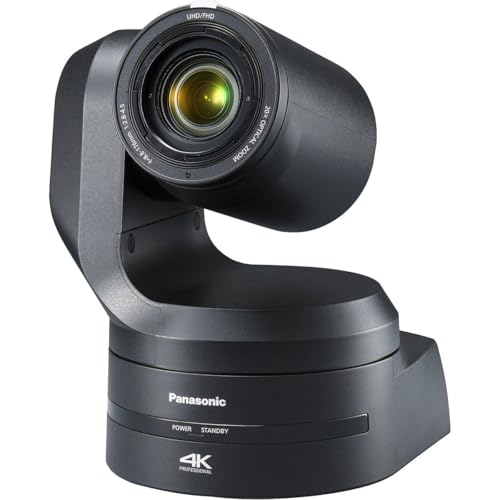
Panasonic AW-UE150
The Panasonic AW-UE150 is a market leader in the PTZ camera category, boasting an impressive 4K support along with HDR capabilities, delivering stunning visuals. It features a wide-angle lens and a high-performance 20x optical zoom, ensuring detailed capture from a distance. With its robust connectivity options and support for a multitude of protocols, it's perfect for various professional applications, from corporate events to live streaming. Its sleek design and user-friendly interface make it a favorite among professionals in the broadcasting industry.
Canon CR-N700
The Canon CR-N700 is the best-in-class choice for remote-controlled studio camcorders thanks to its large-sensor imaging, refined color science, and pro-level connectivity that deliver broadcast-grade pictures and post-production latitude. It commands a premium but justifies it for studios that prioritize low-light performance and dynamic range, whereas the PTZOptics Move 4K and Lumens VC-A71P trade some of that image fidelity for lower upfront cost and simpler deployments and the Vaddio ROBOSHOT Elite focuses more on system-level broadcast robustness.

PTZOptics Move 4K
The PTZOptics Move 4K is a market-driven, budget-conscious option offering flexible streaming connectivity and straightforward control that makes it ideal for small studios, houses of worship, and remote teaching environments. While it won’t match the Canon CR-N700’s sensor performance or the Vaddio ROBOSHOT’s broadcast-oriented feature set, it delivers strong value — lower acquisition and integration costs for teams that need reliable 4K PTZ functionality without premium studio pricing.

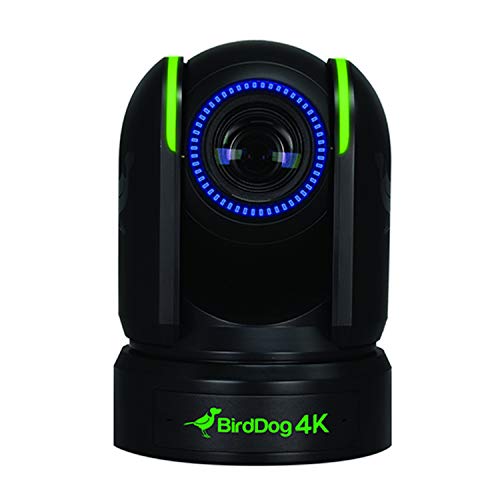
BirdDog P4K
The BirdDog P4K is a standout in the market due to its exceptional 4K NDI capabilities, allowing for seamless integration in IP-based setups. It combines impressive image quality with low latency, making it perfect for live production environments where speed is critical. Additionally, its built-in NDI encoding technology facilitates easy transmission and broadcasting over existing networks. The robust build and high flexibility of the P4K ensure it meets the rigorous demands of professional users.
Lumens VC-A71P
The Lumens VC-A71P stands out as a cost-effective, mechanically robust studio PTZ with precise pan/tilt mechanics and a long, dependable optical reach tailored to corporate and educational installations. It strikes a balance between image performance and total cost of ownership: superior optical zoom and durable construction compared with many consumer-oriented PTZs, while remaining more affordable than the top-tier Canon and offering simpler, often more economical integration than full broadcast solutions like the ROBOSHOT Elite.

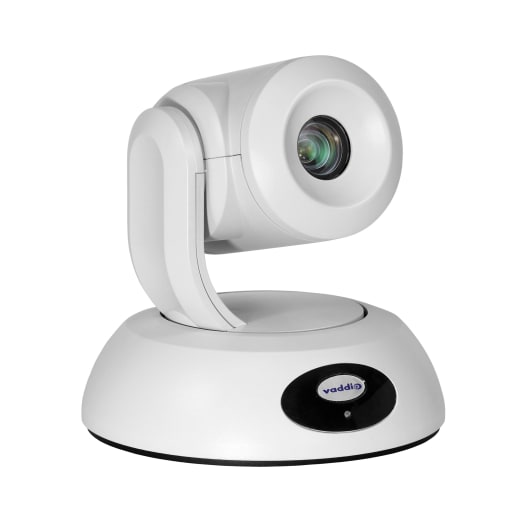
ROBOSHOTElite 60E USB
The ROBOSHOT Elite 60E USB is a market-leader for broadcast and system-integrated studio environments, prized for its rugged build, dependable control interfaces, and workflow-friendly connectivity that minimize operational risk in live productions. It is typically positioned above entry-level PTZs in price but below or beside high-end cinema-style cams like the Canon CR-N700 in terms of pure image sensor performance, offering instead superior system integration, broadcast features and long-term reliability that studios and integrators value.
Research and industry findings that support remote-controlled camcorder adoption
Academic papers, broadcast engineering reports, and industry case studies have examined the practical benefits of PTZ and remote-controlled cameras in professional workflows. These sources highlight measurable gains in operational efficiency, safety, and scalability when productions use remote-capable cameras and IP-based control systems. Research also covers how automation and remote operation support multi-camera coverage, consistent shot composition, and faster turnaround for live and recorded content.
Operational efficiency: Industry reports and broadcaster case studies show remote-controlled cameras reduce on-site crew requirements and accelerate setup times, enabling more productions to run with smaller teams.
Cost and ROI: Analyses from production houses and system integrators demonstrate lower labor costs and faster return on investment for automated and remotely operated multi-camera setups compared with fully manned studios.
Safety and flexibility: Research into remote production workflows, particularly during health-restricted periods, documents reduced personnel exposure and greater flexibility for geographically distributed teams.
Consistency and quality: Technical evaluations in broadcast engineering literature note that PTZ systems provide repeatable framing and automated preset recall, improving consistency across live and series production.
Integration and control: Studies of IP-based workflows emphasize the benefits of protocols such as NDI, SMPTE ST standards, and SRT in simplifying routing, remote control, and low-latency streaming for professional environments.
Frequently Asked Questions
Which remote studio camcorder should I buy for live events?
Choose the Sony BRC-X400 for live events because it offers 4K resolution, smooth pan-tilt-zoom (PTZ) functionality, and advanced tracking; it’s rated 4.7 with a $4,399.99 USDlisting price.
What specific zoom and resolution specs does Panasonic AW-UE150 have?
Panasonic AW-UE150 supports 4K resolution, includes HDR capabilities, and has a 20x optical zoom with a wide-angle lens; it has an average rating of 4.8 and costs $8,872.98 USD
How does Canon CR-N700 price compare to Sony BRC-X400?
Canon CR-N700 lists for $7,999.00 USDversus $7,999.00 USDfor Sony BRC-X400, so the Canon costs $4,399.99 USDmore while adding advanced remote streaming options like IP, NDI|HX, and SRT.
Does Canon CR-N700 support IP, NDI|HX, and SRT streaming?
Yes—Canon CR-N700 supports advanced remote control options including IP, NDI|HX, and SRT streaming with multiple simultaneous outputs; it’s rated 4.8 and priced at $7,999.00 USD
Conclusion
Remote-controlled studio camcorders are a practical, scalable choice for American studios, houses of worship, educational institutions, corporate AV teams, and independent production companies in 2026. The seven models covered on this page — Sony BRC-X400, Panasonic AW-UE150, Canon CR-N700, PTZOptics Move 4K, BirdDog P4K, Lumens VC-A71P, and ROBOSHOTElite 60E USB — represent the current range of capabilities from compact, budget-friendly units to broadcast-grade systems. For most broadcast and studio installations the Panasonic AW-UE150 stands out as the best overall choice because of its image quality, reliability, and integration features. We hope you found the information you needed; use the site search to refine by resolution, connectivity, price, or intended use case, or expand your search if you want more specialized recommendations.