Top 7 Commercial Underwater Drones in the USA — 2026 Guide
Published on Thursday, February 26, 2026
Commercial underwater drones are engineered for professional applications, offering robust features for industries such as marine research, inspection, and entertainment. These vehicles — commonly called underwater ROVs or UUVs — combine high-quality imaging, precise navigation, and durable hardware to operate reliably in demanding conditions. In the United States, demand is driven by several factors: tighter regulatory and safety standards for inspections, growth in offshore energy and infrastructure projects, expanding environmental monitoring programs, and increasing production needs for underwater filming and media. Professionals prefer commercial models because they deliver long endurance, strong tethering and control systems, integrated sensors such as high-resolution cameras and sonar, and modular payload options that fit diverse mission profiles. For 2026, buyers in the USA look for proven reliability, ease of deployment, maintainability, strong manufacturer support, and data quality that integrates smoothly with mapping and analysis workflows.
Top Picks Summary
QYSEA FIFISH V6S
The QYSEA FIFISH V6S stands out in the underwater drone market with its exceptional maneuverability and advanced features. It offers 4K UHD video recording, a 220-degree tilt gimbal camera, and a depth rating of 200 meters, making it perfect for both professional and recreational use. Its unique control system allows users to pilot the drone using a smartphone or tablet, giving them unprecedented control over their underwater explorations. Additionally, its compact design and lightweight build make it easy to transport during dives or expeditions.

Chasing M2 Pro
The Chasing M2 PRO is a market leader in underwater drones, known for its extraordinary versatility and powerful capabilities. With an impressive 4K camera and the ability to dive to depths of 150 meters, it is ideal for scientific research, underwater inspections, and recreational diving. Its intuitive control system and real-time streaming feature make it user-friendly, while the option to attach various accessories expands its functionality. The M2 PRO's robust design is built to withstand harsh conditions, ensuring long-lasting performance.

Blue Robotics BlueROV2 Heavy Configuration
BlueROV2 Heavy Configuration is positioned as a commercial-grade, highly modular ROV that offers exceptional payload capacity and customization for inspection, survey and tooling integration. It holds its place by delivering open-source hardware, a large third-party ecosystem and a lower total cost of ownership compared with turnkey industrial units, while offering more customization and payload capacity than lighter consumer models like the Gladius Mini S.
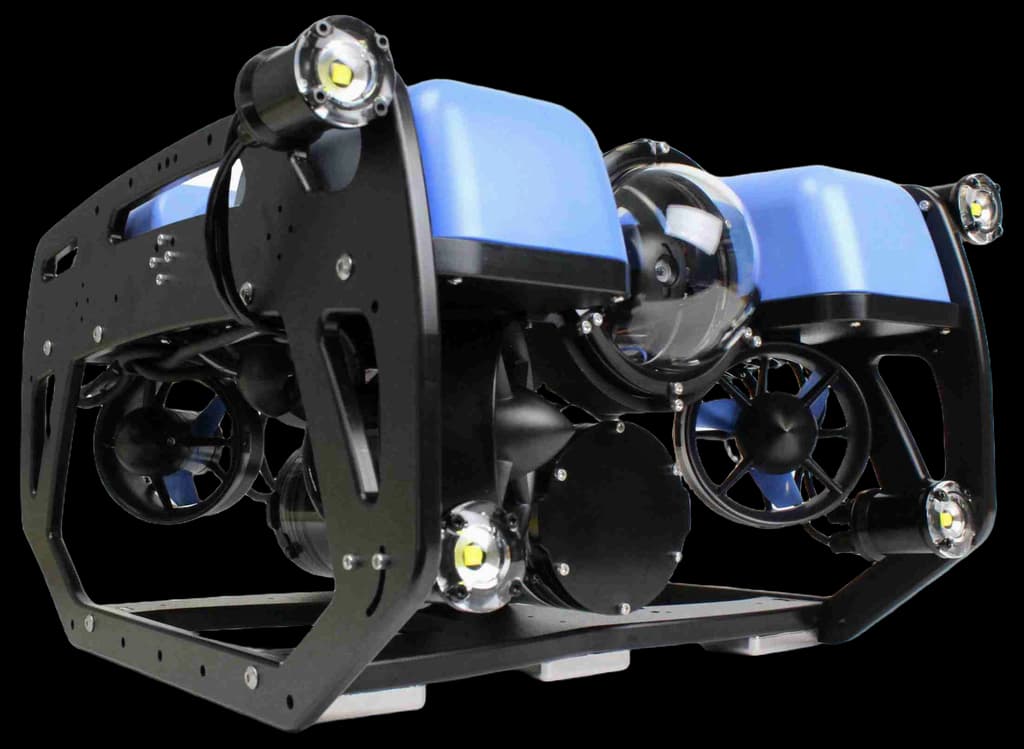
$5,000-$12,000
Chasing Gladius Mini S
The Gladius Mini S serves commercial users who need a highly portable, budget-friendly inspection drone that is quick to deploy for shallow-water surveys and asset checks. It stands out financially as a low-cost, easy-to-use option and technically as a compact, camera-focused platform, but it offers less depth, payload and tooling flexibility than heavier commercial ROVs such as the BlueROV2, Deep Trekker DTG3 or the FIFISH W6.

Deep Trekker DTG3
The DTG3 is a market leader for industrial underwater work thanks to its rugged, turnkey design, extensive accessory ecosystem (manipulators, sonar, tooling), and commercial-grade support and warranty offerings. It justifies a higher price by delivering proven reliability, deeper-rated operations and integrated professional features that reduce deployment risk and crew time compared with DIY/modular solutions like BlueROV2 or smaller prosumer platforms like the Gladius and FIFISH.
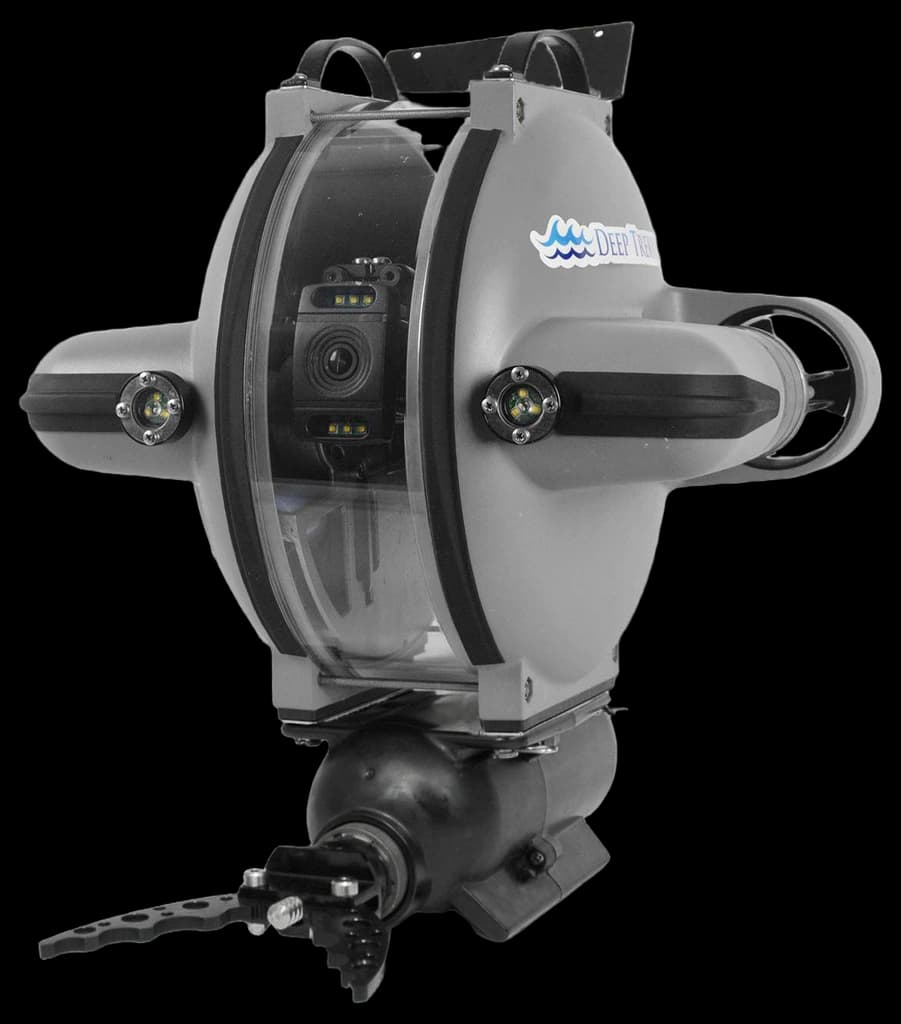
$25,000-$45,000
PowerVision PowerRay Wizard
The PowerVision PowerRay Wizard redefines the underwater drone experience with its innovative features and unique design. Equipped with a 4K UHD camera and capable of diving down to 30 meters, it excels in capturing stunning underwater footage. One of its standout features is the bait drop technology, which allows anglers to catch fish more effectively. With an integrated underwater sonar system, it provides real-time data to enhance fishing experiences, making it a perfect choice for fishing enthusiasts and explorers alike.

QYSEA FIFISH W6
The FIFISH W6 occupies a niche for commercial users who need high-speed, highly maneuverable video-first inspections and photogrammetry with a compact, six-thruster design and 4K imaging. It balances mid-range pricing with strong cinematography and maneuvering capabilities, offering faster transit and smoother camera control than the Gladius Mini S and greater turnkey imaging performance than many modular alternatives, though it is less modular for heavy tooling than the BlueROV2 or as rugged as Deep Trekker's DTG3.

What Research and Field Studies Say
Scientific literature and industry field trials consistently show that commercial underwater drones improve safety, reduce costs, and increase data quality for underwater tasks. Studies across marine engineering, ecology, and offshore operations report that remotely operated vehicles enable safer inspections of structures, more frequent monitoring of sensitive habitats, and faster data collection than traditional diver-based methods. Research also highlights the benefits of integrated imaging and acoustic sensors for species surveys, pipeline and hull inspections, and seabed mapping. Advances in autonomy and onboard processing mean more mission time is spent collecting useful data and less on manual piloting.
Safety: Multiple field evaluations find ROV inspections lower diver exposure to hazardous conditions and reduce overall project risk.
Accuracy and repeatability: Sonar and high-resolution video combined with positioning systems improve defect detection and allow repeatable survey transects.
Cost and efficiency: Case studies show reduced operational time and lower mobilization costs compared with manned and diver-based approaches.
Environmental monitoring: Studies demonstrate increased detection rates for benthic species and habitat features when using high-resolution imaging and acoustic sensors.
Technological trends: Research highlights gains from autonomy, machine learning for image analysis, and modular sensor payloads that expand mission capability.
Frequently Asked Questions
Which drone should I buy for inspection work?
Choose the Blue Robotics BlueROV2 Heavy Configuration for inspection and tooling integration because it’s an open-source, highly modular ROV designed for custom commercial payloads and sensors, with a 4.7 average rating.
Does the QYSEA FIFISH V6S support 4K video recording?
Yes—the QYSEA FIFISH V6S includes 4K UHD video recording plus a 220-degree tilt gimbal camera and a 200-meter depth rating, with a 4.7 average rating.
Is the Chasing M2 PRO better than QYSEA V6S?
The Chasing M2 PRO doesn’t list a price here, but the QYSEA FIFISH V6S is $3,999.00 USDand adds 4K UHD recording with a 200-meter depth rating; QYSEA averages 4.7 vs. M2 PRO at 4.6.
What depth rating does the Chasing M2 PRO offer?
The Chasing M2 PRO is listed with a 150-meter dive depth in the overview, and it also mentions 4K camera capability and a 4.6 average rating.
Conclusion
This selection highlights seven top commercial underwater drones you can consider in the USA for 2026: QYSEA FIFISH V6S, Chasing M2 PRO, Blue Robotics BlueROV2 Heavy Configuration, Chasing Gladius Mini S, Deep Trekker DTG3, PowerVision PowerRay Wizard, and QYSEA FIFISH W6. Each model targets specific professional needs: the FIFISH V6S and W6 emphasize imaging and maneuverability, Chasing M2 PRO and Gladius Mini S balance portability with capability, Deep Trekker DTG3 focuses on inspection-grade durability, and PowerVision PowerRay Wizard serves niche filming uses. For most commercial users who need a highly configurable, durable, and well-supported platform, the Blue Robotics BlueROV2 Heavy Configuration stands out as the best overall choice because of its modularity, strong community and developer ecosystem, and proven track record in professional missions. We hope you found what you were looking for; you can refine or expand your search using the site search to compare specs, mission profiles, or budget ranges.